

DSU researchers make new discovery on strawberry disease-resistance
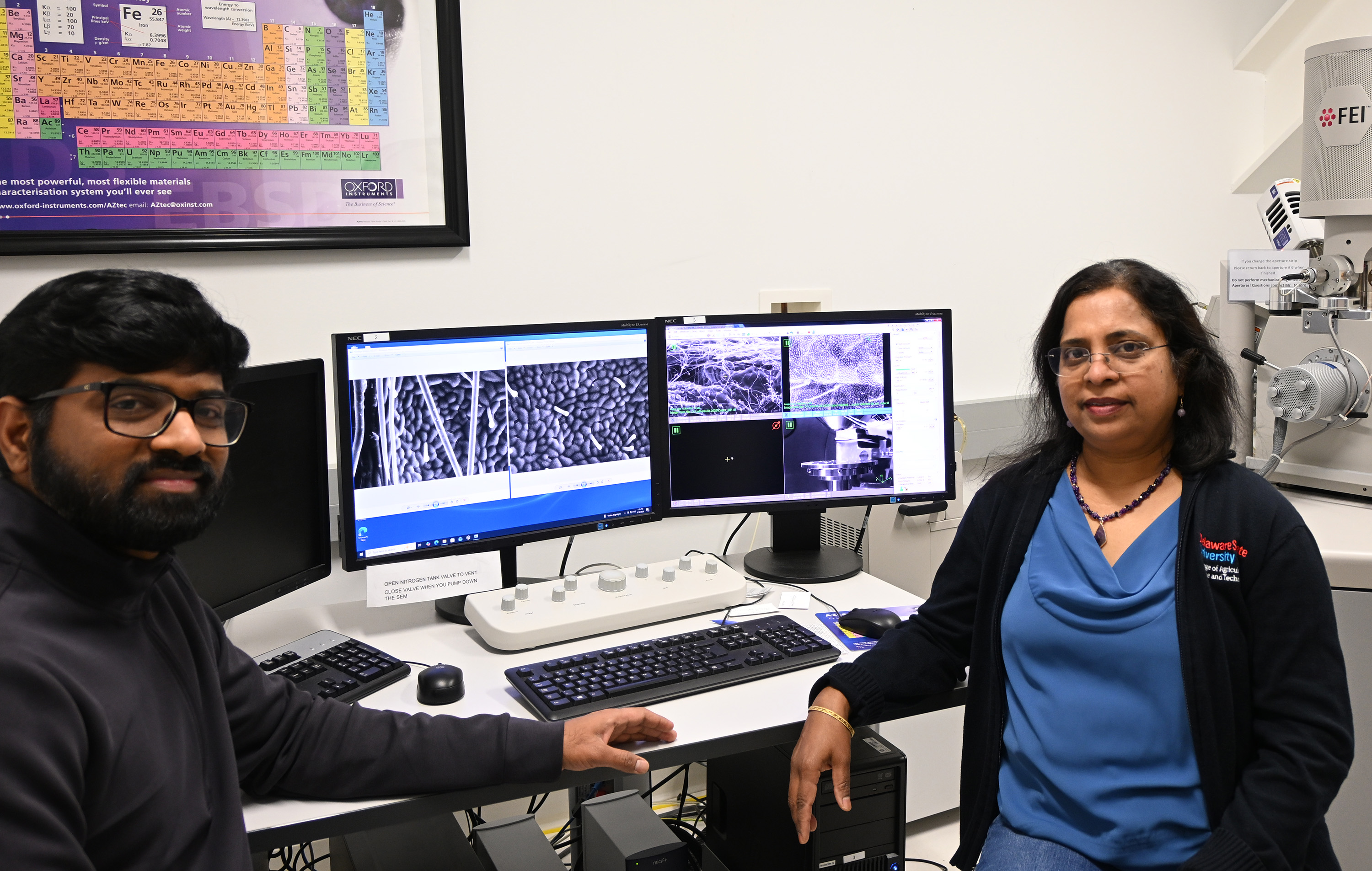
Dr. Kalpalatha Melmaiee, Associate Professor of Agricultural and Natural Resources, and her team of researchers, have unraveled an aspect of the fungal disease mystery that adversely affects strawberry cultivation.
Anthracnose, caused by Colletotrichum spp., is a devastating fungal disease that poses significant threats to strawberry production and leads to post-harvest losses worldwide. This fungus can attack leaves, flowers, fruits, and even roots, leading to fruit rot, plant decline, and significant yield losses, complicating disease management.
Managing the disease often requires repeated fungicide applications, which can be costly and less effective over time. Additionally, the presence of higher pesticide residues in strawberries has been listed among the dozen dirtiest fruits in 2025 by the Environmental Working Group (EWG). Therefore, it is important to identify or develop anthracnose resistance in strawberries, to reduce pesticide usage, and offer sustainable management options, says Dr. Melmaiee, Associate Professor in DSU’s Department of Agriculture & Natural Resources. 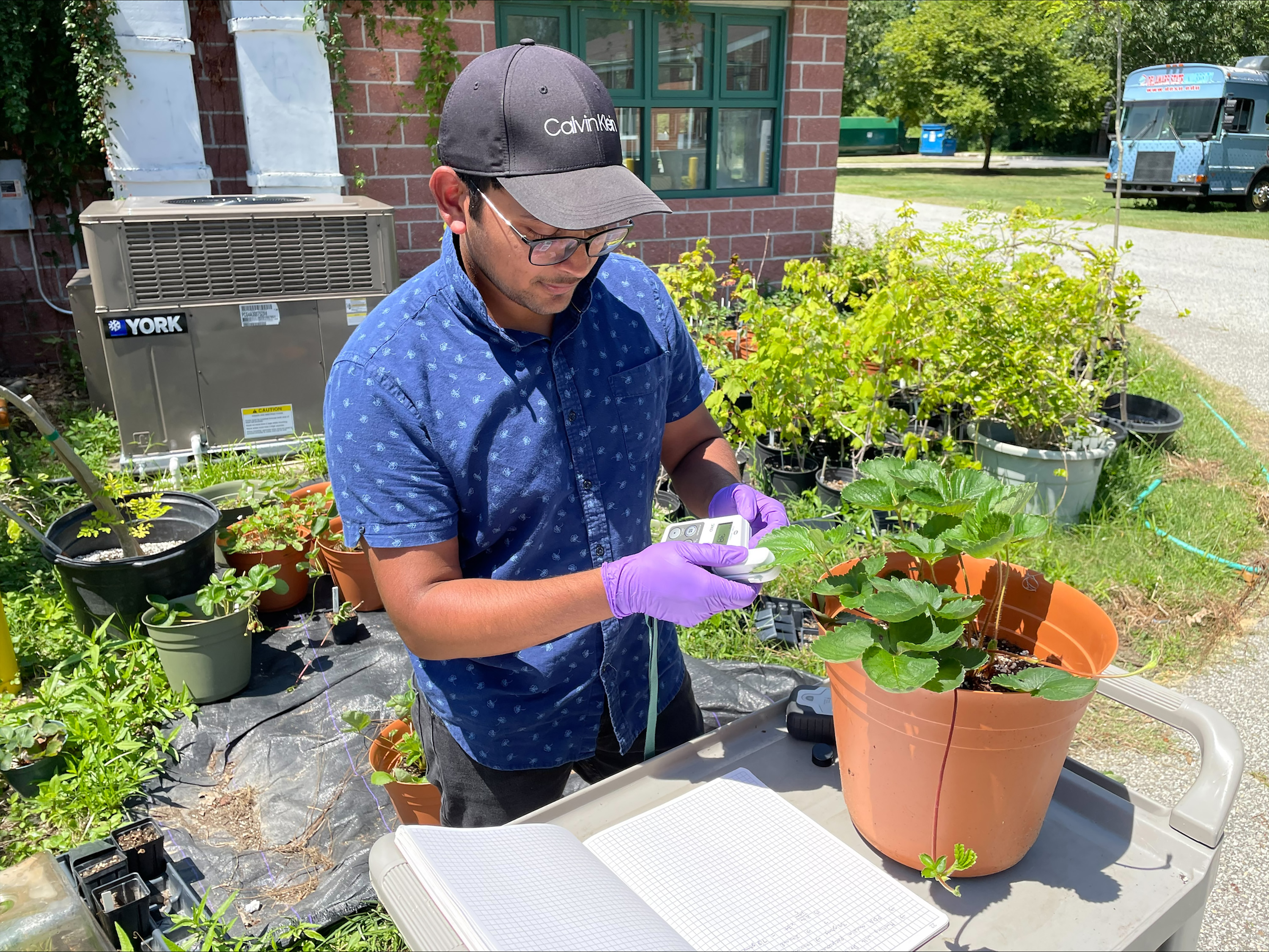
A study recently published in Scientia Horticulturae by the DSU researchers found that both the number and type of leaf hairs, known as trichomes, are closely linked to how well strawberry plants resist anthracnose.
Trichomes are tiny hair-like structures common on many plants that help protect against insects and harsh environmental conditions. “In strawberries, they come in two main forms: non-glandular trichomes, which act like physical barriers, and glandular trichomes, which can release sticky or chemical substances. However, their role in defending strawberries against fungal diseases had not been well studied,” says Venkata Hemanth Limmada, a graduate student at DSU and first author of the paper on this work.
To investigate this, the research team evaluated 31 diverse strawberry genotypes for their response to anthracnose. “Using a simple leaf-based screening method developed in our lab, we were able to compare how severely each genotype was affected by the disease, and this protocol provides a robust screening method,” says Dr. Amaranatha Vennapusa, a postdoctoral researcher at DSU.
The research team’s thorough microscopy analysis of strawberry leaves at DSU for the first time examined the number, shape, and condition of trichomes on the leaves.
What they found was striking: strawberry plants with more well-developed glandular trichomes consistently showed less disease injury in leaf discs, suggesting a possible resistance mechanism. In contrast, plants with fewer or poorly developed trichomes and more non-glandular trichomes were found to be more vulnerable to infection.
The tiny leaf hairs appear to act as a first barrier against the pathogen either by physically limiting the fungus from spreading on the leaf surface or by creating an unfavorable environment for infection.
According to Dr. Melmaiee, this is the first study to clearly link trichomes to anthracnose resistance and plant physiological traits in strawberries, offering a new perspective on how plants naturally protect themselves. Instead of focusing only on molecular markers, the work highlights the importance of visible, physical traits that breeders can easily observe and select for.
The findings could significantly impact strawberry breeding. By selecting plants with desirable trichome traits, breeders may be able to develop new strawberry varieties that are naturally more resistant to anthracnose, reducing the need for chemical treatments, Dr. Melmaiee, who was also the research’s corresponding author.
Beyond strawberries, the study also underscores a broader message: sometimes, powerful solutions in plant breeding can be found by paying attention to small, easily overlooked traits.
The authors of the article are Venkata Hemanth Limmada, Dr. Amaranatha Vennapusa, Michael Moore, Mekhai Abrams, Dr. Sathya Elavarthi, and Dr. Kalpalatha Melmaiee.
Citation:
Limmada, V. H., Vennapusa, A. R., Moore, M., Abrams, M. E., Elavarthi, S., & Melmaiee, K. (2026). Trichomes as a barrier: Understanding the strawberry resistance to anthracnose caused by Colletotrichum acutatum. Scientia Horticulturae, 355, 114528. https://doi.org/10.1016/j.scienta.2025.114528
Link: https://www.sciencedirect.com/science/article/pii/S0304423825005758